If you've ever looked into how to market an indie game, you've probably heard all the usual advice...
Get your Steam page up.
Start posting on social media.
Reach out to content creators.
Join festivals.
Build a community.
Get those wishlists!
It's all good advice, but there's one pretty important thing missing from most of these conversations:
When should you actually be doing all this stuff?
Should you announce your game as soon as you've got something to show? When's the right time to release a demo? How far ahead of launch should you start reaching out to content creators? And how do you make sure you're not spending months on marketing activities that aren't actually getting you anywhere?
I've worked on over 100 game launches across every platform and genre, and one of the things I see developers struggle with most isn't necessarily knowing what marketing activities they should be doing. It's figuring out when to do them, what to prioritize, and how to make everything work together.
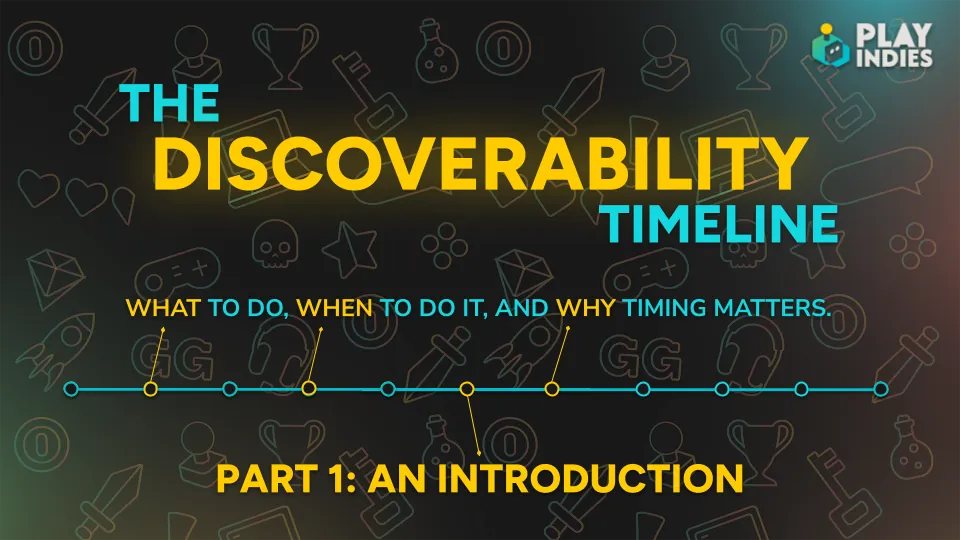
That's why I put together the Discoverability Timeline, a framework to help developers plan their marketing around the different stages of making and releasing a game on any platform. (Not just Steam!)
I presented this framework at this year's Games Connect Asia Pacific (GCAP), and the feedback was great! So I've decided to break it down into a series of blog posts to help more developers put it into practice.

Marketing Isn't Just a To-Do List
It's easy to approach marketing like a checklist...
Make a Steam page? Check.
Announce the game? Check.
Post some screenshots? Check.
Send out some keys? Check.
But doing all the right things doesn't necessarily mean you're doing them at the right time.
Think about announcing your game, for example. You might have an awesome trailer that gets a bunch of attention, but if you haven't got a store page ready, where are you sending all those interested players?
Or maybe you've spent weeks reaching out to content creators, only to find that most aren't interested because your game isn't playable yet.
Neither activity was necessarily a bad idea. The timing just wasn't quite right.

Different marketing activities serve different purposes, and they're generally much more effective when you've got a plan for how they fit together.
You don't need to do everything at once, and you definitely don't need to do everything as early as possible. You just need to know what you're working towards.
So, What's the Discoverability Timeline?
The Discoverability Timeline breaks game marketing into seven phases, starting before you've even announced your game and continuing well beyond launch.

It's not a strict schedule you need to follow. Every game is different, and the timing will depend on things like your development schedule, budget, team size, and the type of game you're making. Some phases will overlap, and you might find yourself working on a few of them at the same time.
The idea is to give you a better understanding of what to focus on at each stage, so you're not trying to figure everything out as you go. I'll go into greater detail about each phase in subsequent blog posts, but here's an overview of each phase to get you started on the right path.
1. Foundation: Figure Out What You're Making (And Who Wants It)
Before you announce your game / 12+ months before launch
Yes, marketing starts before you've even announced your game. Ideally, it starts pretty early in development! A phrase I often say is "design your game with marketing in mind." If you're making a game with the intention of selling it, this is a step you really shouldn't skip.
It's where you figure out who your game is for, what makes it interesting, and whether there's actually an audience looking for something like it.
Take a look at similar games. Who's playing them? What do players like or dislike about them? How well have they performed? What makes yours different?
You don't need to spend months putting together a massive market research report, but you should have a reasonable understanding of where your game fits in the market. This information can also help you make better development decisions. Maybe there's a feature players really expect from your genre, or perhaps you've discovered that the audience you're targeting is much smaller than you originally thought.
It's much easier to make adjustments early in development than to discover these things a few weeks before launch.
2. First Impression: Make Your Announcement Count
When you're ready to show your game to the world / Approximately 9-12 months before launch
You've got something exciting to show, and you're ready to tell everyone about it! Before you hit publish, though, make sure you're actually ready to take advantage of that attention.
For PC games, that usually means having your Steam page live, with a good trailer, screenshots, and a description that makes it immediately clear what your game is about. Regardless of platform, you want someone to see your announcement, think "Hey, that looks cool!", and have somewhere to go to learn more and wishlist, follow, or pre-register for your game.
It's also worth thinking about how you're going to get people to see your announcement in the first place. Can you line it up with a showcase? Reach out to media? Get some content creators involved? Coordinate a few different activities to help spread the word?
You don't need a huge announcement campaign, but putting a bit of planning into your first reveal can make a big difference. First impressions are everything in this oversaturated market.
3. Build: Keep Giving People Reasons to Care
The months between announcement and launch / Approximately 6-9 months before launch
So, you've announced your game. You've got some wishlists or pre-registrations coming in. Now what? This is where things can get a little tricky.
I've seen plenty of developers have a great announcement, only for things to go pretty quiet afterwards. They might post the occasional screenshot or development update, but there's not much happening to bring new people to the game.
You don't need to be posting every day, and you definitely don't need to turn yourself into a full-time social media manager. Instead, think about what you've got coming up that people might actually find interesting.
Maybe you're revealing a new mechanic, showing off an environment, introducing a character, or sharing a big development milestone. These are all opportunities to remind people your game exists and, hopefully, introduce it to some new players along the way.
It's also a good time to start building relationships with media, content creators, and communities that might be interested in your game. The important thing is to keep giving people reasons to pay attention, rather than posting just for the sake of posting.
4. Prove: Let People Actually Play Your Game
When you've got something worth putting in players' hands / Approximately 3-6 months before launch
At some point, people are going to want to do more than just watch trailers and look at screenshots. They want to play your game!
This is where playtests, demos, and hands-on opportunities come in, and they can be a great way to generate a spike in visibility.
Not only can these help you gather valuable feedback, but they can also be great marketing opportunities. Players can share their experiences, content creators can make videos or stream the game, and events like genre-specific showcases and festivals (yes, even Steam Next Fest) can introduce your game to a much wider audience.
But there's a bit of a balancing act here. You don't want to release a demo so early that it's a buggy mess and leaves people with a bad impression. On the other hand, waiting until the last minute means you might not have enough time to act on feedback or make the most of the attention.
You also want to think about what happens after someone plays. Can they wishlist the game? Join your community? Share it with friends? Is there another upcoming event or announcement they can look forward to?
A good demo can do a lot more than show people what your game is like. It can give them a reason to get excited about its release.
5. Amplify: Start Bringing Everything Together
As you get closer to launch / Approximately 1-3 months before launch
Now's the time to start making the most of all that work you've been doing.
You've hopefully got some people following your game, a growing wishlist or pre-registration count, and relationships with media and content creators. Rather than doing a little bit of marketing here and there, start thinking about how you can bring different activities together to make a bigger impact.
For example, if you're announcing your release date, could you also share a new trailer, send out a press release, coordinate some content creator coverage, and get your community involved?

Those activities can help support one another, giving your announcement a better chance of reaching people outside your existing audience.
Of course, not every update needs to be a huge campaign. But when you've got something important to share, it's worth putting some extra effort into making sure people see it. One big wave of attention can be far more impactful than six small splashes!
6. Launch: It's Finally Here!
Your release window
You've made it! Your game's finally launching! Hopefully, you've already done a lot of the hard work leading up to this point.
You've built awareness, collected wishlists or pre-registrations, reached out to media and content creators, and given players reasons to get excited.
Now it's time to turn that interest into people actually buying and playing your game.
This is where your launch announcements, review coverage, content creator campaigns, community activity, and any platform visibility opportunities come together.
One thing I always recommend is getting as much of your launch marketing organized ahead of time as possible. You really don't want to be scrambling to find media contacts, finish your trailer, or figure out what to post while you're also trying to launch a game. There's already going to be plenty happening!
Whenever I tell someone I'm launching a game that week, the response is usually, "Oh wow, you must be so busy!"
In reality, if I've done my job right, most of the hard work is already behind me, and I'm looking ahead to post-launch activities.
And remember, while launch is obviously a big deal, it's not your only opportunity to find success. Which brings us to...
7. Sustain: Don't Disappear After Launch!
The months and years following launch
Your game's out. Time to put your feet up and never think about marketing again, right?

Not quite!
One of the biggest mistakes I see developers make is putting all their marketing effort into launch and then going completely quiet afterwards. There's still plenty you can (and should) do to help new players discover your game. Launch week is only a small part of your game's commercial lifespan. Don't overlook the revenue potential of the months and years that follow!
Updates, new content, discounts, community events, console releases, and additional content creator campaigns can all give you new opportunities to reach people. You've also got something pretty useful now: actual player feedback and sales data.
Take a look at who's buying your game, what they're saying about it, and which marketing activities seem to be working. You might discover an audience you hadn't considered, or find that a particular type of content is bringing in a lot of new players.
You don't need to keep marketing your game forever, but it's worth having at least some sort of post-launch plan rather than stopping everything the moment it releases.
Why Does All This Timing Stuff Matter?
Because doing the right thing at the wrong time can mean missing out on a really good opportunity.
Imagine putting a ton of effort into getting content creators to cover your game, but nobody watching can actually play it or even wishlist it yet.
Or spending money promoting a big announcement, only to realize your Steam page isn't ready.
Or participating in a major festival with a demo that really needed another month of polish.
These are all situations where a little more planning could have made a big difference. And it's not just about avoiding mistakes!
When you coordinate your marketing activities around important milestones, you give yourself a better chance of building momentum.
A trailer, a demo, a showcase appearance, and content creator coverage can all be useful on their own. But when they're planned to support one another, they can potentially have a much bigger impact.
That's what the Discoverability Timeline is really about.
Does This Apply to Console and Mobile Games Too?
Absolutely!
A lot of the examples I've used here focus on Steam, simply because it's where many indie developers are releasing their games.
But the same general principles apply to console and mobile marketing too.
The specific activities will look a little different, of course. Console developers might need to work around platform announcements and certification schedules, while mobile developers may focus more on testing, retention, and user acquisition.

But you're still trying to answer the same questions:
Who are you trying to reach?
What do you want them to do?
When's the best time to reach them?
So, Where Should You Start?
If you're reading this and thinking, "Great, now I've got seven phases of marketing to worry about!", don't panic.
You don't need to plan every single activity between now and launch.
Start by figuring out where your game currently sits in the timeline:
Haven't announced it yet? Focus on understanding your audience and getting your announcement materials ready.
Already announced? Think about what you've got coming up that could help you reach new players.
Getting close to launch? Start looking at how you can coordinate your marketing activities and make the most of the interest you've built.
Once you know what your next big marketing beat is, work backwards from there:
What needs to be ready?
Who do you need to contact?
How much time do you need to prepare?

Even a fairly simple plan can save you a lot of headaches later.
What's Next?
This is the first article in our Discoverability Timeline series!
Throughout this series, we'll be taking a closer look at each phase, with practical advice on things like market research, game announcements, building wishlists, working with content creators, demos, festivals, and launch planning.
The goal isn't to turn every indie developer into a marketing expert. It's to help you understand what your options are, make better decisions, and put together a plan that works for your game and your resources.
Because you don't need to do everything to market your game.
You just need to know what makes sense for your game, and when to do it.
Thanks for reading!
Kate Hall - PlayIndies Co-Founder